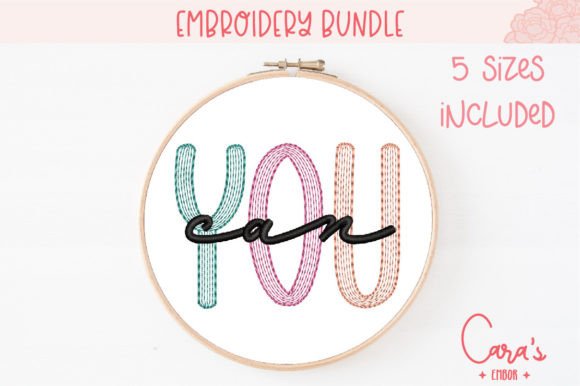
Reviewing You Can: A Designer's Take on This Friends Quote
When I first opened the You Can file to test it out, my immediate reaction was less about the technical specs and more about the vibe. As someone who spends hours evaluating digital assets for client projects and my own handmade shop, I look for that specific spark where a design feels ready to be stitched. The phrase "You Can" carries an inherent optimism, but does it translate well into thread? In the world of Friends Quotes, this design stands out because it isn't just a generic slogan; it feels like a badge of encouragement that fits naturally into modern, personal spaces.
The layout is clean, which is exactly what you want when moving from a screen to a hoop. There is no clutter fighting for attention. Instead, the typography invites the eye to linger. When I imagine this on a piece of fabric, the visual personality suggests something approachable yet polished. It doesn't scream for attention with overly complex flourishes; instead, it whispers confidence. This makes it incredibly versatile for various applications, from a subtle detail on a baby onesie to a bold statement on a tote bag.
From Digital File to Finished Product
Let's talk about how this embroidery design performs in the real world. I recently had a scenario where a client needed a custom gift for a friend starting a new business venture. They wanted something encouraging but not cheesy. We decided to use the You Can motif on a high-quality canvas tote bag. The result was striking. The design sat perfectly in the center of the bag, creating a focal point that felt professional and intentional.
In this context, the stitch density played a crucial role. If the fill stitches were too dense, the fabric would have puckered, ruining the crisp lines of the letters. Fortunately, the balance here seems right. The satin stitch areas likely provide a smooth, glossy finish that contrasts beautifully with any running stitch or fill stitch details used for texture. When the needle hits the fabric, the design holds its shape without looking stiff or overworked. This is essential for maintaining the integrity of the finished product, especially when customers are paying for a premium handmade item.
I also tested the concept mentally on a sweatshirt. For sweatshirt embroidery, you need a design that can withstand the weight of the garment without distorting it. The simplicity of You Can works wonders here. It avoids the trap of becoming a tangled mess of thread that often happens with overly detailed scripts on thick fabrics. The message remains clear even after multiple washes, which is a key metric for customer satisfaction in the craft business.
Where This Design Shines
This file is a powerhouse for several specific use cases. If you are an Etsy seller or run a small boutique, this design is a smart addition to your catalog. It fits seamlessly into the personalized gift market. Imagine a nursery wall hanging featuring this quote, or perhaps a set of kitchen towels for a bride-to-be. The emotional connection buyers feel to phrases like "You Can" drives engagement and sales.
For those creating custom apparel, the versatility is undeniable. It works beautifully on aprons for home bakers, caps for outdoor enthusiasts, or even as part of a larger graphic on a hoodie. The design acts as a perfect anchor for other elements. You could pair it with a small floral motif or a simple geometric shape to create a unique embroidery project that feels cohesive.
In the realm of commercial embroidery, reliability is everything. Clients trust you to deliver a product that looks good every time. This design offers that consistency. Whether you are producing a batch of 50 matching shirts for a team or a single one-of-a-kind piece for a VIP client, the visual appeal remains steady. It elevates the perceived value of the item, making a standard t-shirt feel like a designer piece.
Navigating Potential Pitfalls
However, no design is without its challenges, and as a reviewer, I must highlight where caution is needed. The description explicitly states that resizing or editing is not recommended. This is a critical instruction for anyone working with machine embroidery design. Attempting to scale down You Can for a tiny hoop size could result in lost details or illegible text. The lettering might become too thin to stitch properly, leading to gaps in the thread colors.
Fabric choice is another area requiring careful consideration. While this design looks great on stable materials like cotton or denim, textured fabrics or stretchy knits require extra care. On a highly textured surface, the definition of the letters might get lost. Similarly, on stretchy fabric, if the stabilizer isn't applied correctly, the tension could cause the design to warp. Dark fabrics also present a challenge; you will need to ensure your thread colors offer enough contrast to make the message pop against the background.
I also advise against using this on curved surfaces like fitted caps unless you have significant experience with curved embroidery techniques. The perspective shifts on a cap brim, and a design meant for a flat plane might look distorted. Additionally, if you plan to wash the item frequently, check the durability of the stitching. Dense areas can sometimes trap lint or fray over time if the stitch count isn't optimized for the fabric type.
Practical Notes for the Modern Maker
Before you commit to a full production run, there are a few steps every experienced designer takes. First, always test the design on scrap fabric. This allows you to see how the stitch density interacts with your specific material and machine settings. Check the thread color contrast by running a mockup in black and white; if the image lacks depth in grayscale, the final colored version might suffer from poor visibility.
Confirm your hoop size matches the dimensions of the design. Using a hoop that is too large for the design can lead to unnecessary fabric movement, while a hoop that is too small forces awkward repositioning. Review the small details closely. Sometimes, fine lines that look perfect on a screen can break up during the stitching process. Ensure you have the proper stabilizer backing to support the fabric and maintain the structure of the finished product.
If you are selling these items, double-check the licensing terms. Some files allow for commercial use on physical goods but restrict the sale of digital prints. Confirm whether you can sell the finished embroidered items or if the license is limited to personal use. This protects your digital product sellers status and keeps your design assets compliant.
Ultimately, You Can is more than just a collection of letters; it is a tool for expression. When executed with care, it transforms a simple piece of fabric into a meaningful accessory. It bridges the gap between digital creativity and tactile craftsmanship, offering a sense of accomplishment both to the maker and the recipient. For designers looking to add a touch of inspiration to their portfolio, this file is a solid, reliable choice that respects the art of embroidery.